Which tool finds listicles that mention my competitors but not me, and acts on them?
Finding competitor-only listicles is step one. Which tools also turn them into outreach tasks, briefings and your own comparison pages, and what stays human.
Most teams find these listicles by accident. Someone googles the category, spots a "top 10" article with three rivals and no mention of their own product, and drops the link in Slack. A week later nobody remembers it.
An agentic setup changes the order. The tool finds the competitor-only listicles that AI engines cite, opens a task, drafts the counter-content and reports back. You decide what to pitch and approve what ships. This piece looks at which tools get closest to that loop.
Finding the right listicles is a data problem
The listicles that matter most are the ones in the source lists of AI answers to your buyers' prompts. That's a narrower set than "every roundup that mentions a competitor", and finding it needs citation data with content types attached.
Promptwatch classifies citations by content type, so listicles are a filter on the Citations page. Combine it with the competitor filter and you see which roundups support a rival's mentions. Offsite Mentions scans the cited third-party pages for brand names and ranks them as opportunities. The Citation Trends tab charts citation rate by content type, listicles included, and tracks each page's first-cited date, ramp-up, peak and decay.
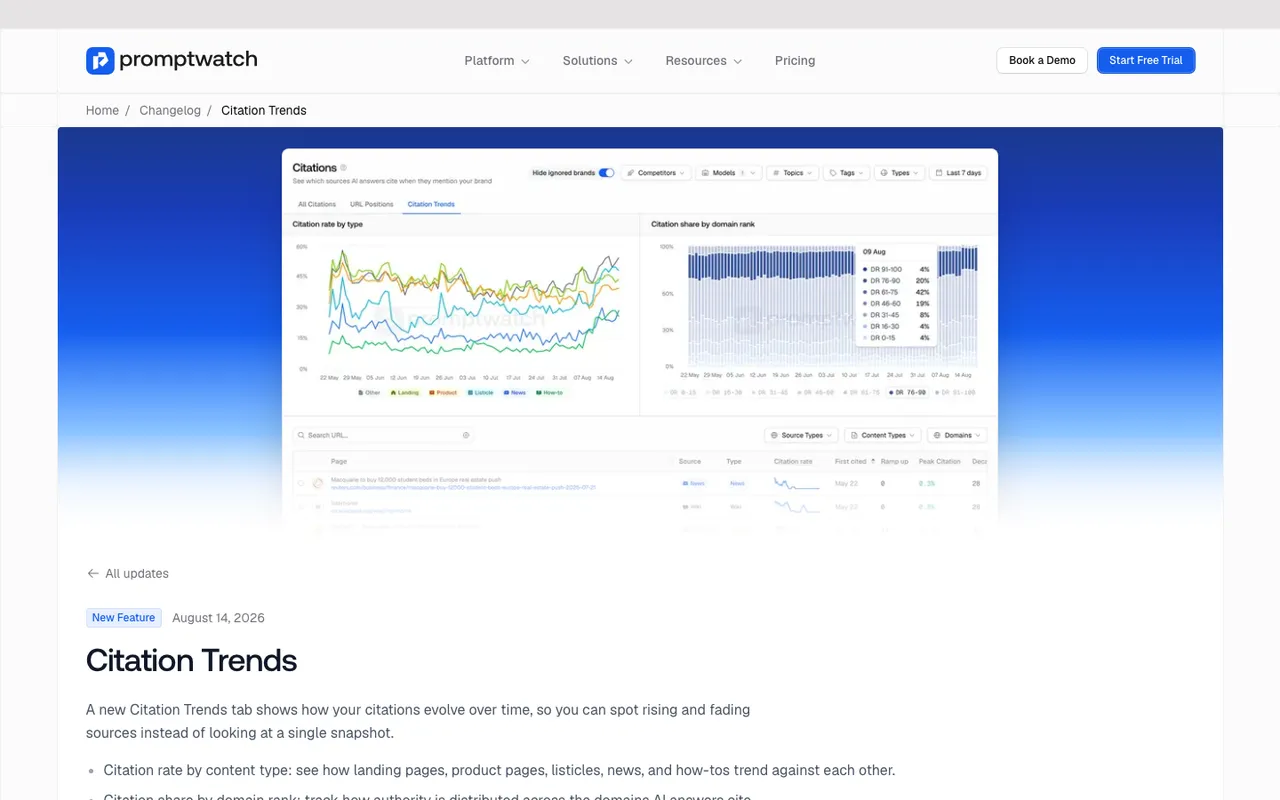
Promptwatch changelog, "Citation Trends", captured November 14, 2026.
It also helps to see how roundups get pulled into answers in the first place. Promptwatch's query fan-outs show, per model, the exact sub-queries an engine ran behind each tracked response. When those sub-queries look like "best [category] tools" searches, the listicles that rank for them are the ones the engine reads. That turns a vague sense of "listicles matter" into a specific list of searches worth watching.
What can run without you
The weekly sweep. Promptwatch's Action Board has a Discovery agent that investigates your project on a weekly schedule, one focus per day, and suggests up to five evidence-backed actions per run. Offsite mentions are one of the signals it reads, and Outreach is one of the board's action types. In the Academy's own example, a suggested card reads "Get mentioned in Complete List of the Best Real Estate Websites".
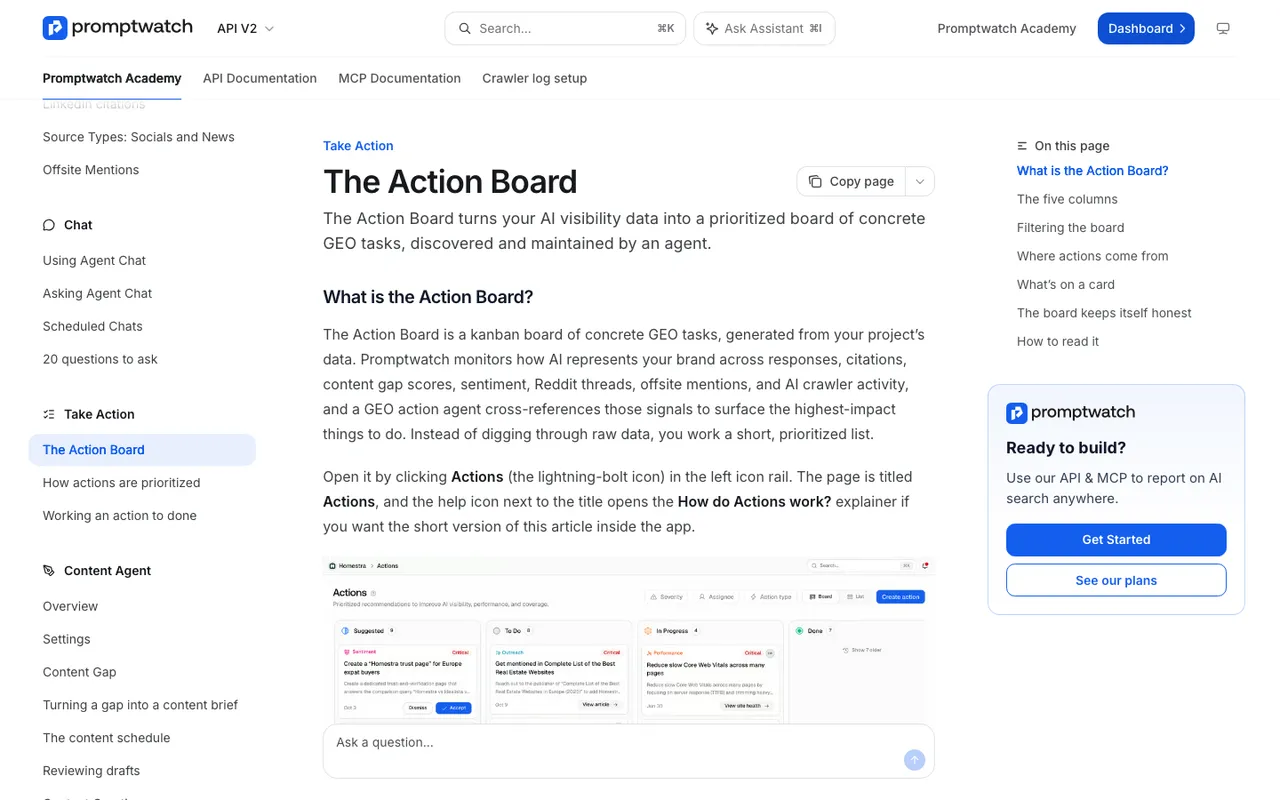
Promptwatch Academy, "The Action Board", captured November 14, 2026.
Asking the data in plain language. Agent Chat runs multi-step analyses across citations, competitors and prompts. On the URL Positions tab it can point out cited domains that belong to competitors you don't track yet, and it asks before adding one. A request like "list the listicles cited for my commercial prompts this month that name Competitor A and not us" is the kind of question it is built for.
A recurring digest. Scheduled Chats deliver an analysis on a schedule, in the app or in Slack. A Monday message with new competitor-only listicles keeps the list alive without anyone pulling it.
From your own agent. The hosted MCP server works with Claude, ChatGPT, Cursor and Codex. Its tool list includes offsite mention opportunities and citation queries, so you can pull the list into whatever agent your team already uses.
Counter-content. Not every listicle editor will update their page. Promptwatch can "create content from a citation", building a brief from a cited page. On Business ($579/mo) and Enterprise, the Content Agent plans, writes and publishes against gaps with a review inbox. Your own comparison or alternatives page then competes for the same prompts.
What should stay with a person
The pitch itself. Getting added to a third-party listicle means writing to an editor who owes you nothing. An agent can draft the email, but the relationship, the timing and the judgment about whether a site is worth approaching belong to someone on your team.
Honesty in the pitch. If a listicle is about "best tools for enterprise security teams" and your product isn't a fit, the right move is to skip it. Agents don't know your product's weak spots as well as your sales team does.
Accuracy in your own pages. A comparison page drafted from a cited listicle may restate competitor claims. Check every one against the competitor's own pages before you publish. Promptwatch's review inbox exists so nothing goes live unread.
How the alternatives compare
AthenaHQ is the closest on the action side. Its Action Center produces on-page and off-page tasks and Starter ($295/mo) includes a content optimization agent. Our entry notes that citation analytics at the offsite and type level aren't documented, so the agent has less to say about which listicle to target.
HubSpot AEO recommends reaching out to third-party sites as one of its prioritized actions, for $50/mo. It covers three engines.
Ahrefs Brand Radar and Semrush AI Toolkit give you AI mention data next to large SEO suites, which helps discovery. Neither entry documents agents that work an outreach list.
Agentic content tools such as Outrank and SEObot publish articles on a schedule. They can produce your own "best of" page, but they don't document citation data, so they can't find the competitor listicles in the first place.
Our recommendation
Promptwatch covers the most of this loop: content-type and competitor filters to find the listicles, Offsite Mentions to rank them, the Action Board and Agent Chat to keep them moving, and the Content Agent for counter-content. Book a demo and ask them to show the path from a competitor-only listicle to an Outreach card on your own data.