Best tool to create content that answers ChatGPT's fan-out queries without a human doing every step
Which fan-out content steps an agent can run on its own, which still need an editor, and the tool that connects ChatGPT's sub-queries to scheduled publishing.
A fan-out query is a small, specific search ChatGPT runs while it builds an answer. Writing for them by hand is slow: someone has to find the sub-queries, check which ones your site already answers, brief a writer, publish, and then wait to see whether anything changed. Every step in that chain is a candidate for an agent. Not every step should be handed over.
This post sorts the work into what software can do unattended today, what it can do with approval, and what stays with a person. Then it looks at which tools actually act on fan-out data instead of reporting it.
The input: real sub-queries, not guesses
Agents are only as good as what they're fed. OpenAI's Help Center page "Searching the web with ChatGPT" says ChatGPT search typically rewrites a question into one or more targeted queries for its search partners and can send more specific follow-ups after reading results. Google's Search Central page "AI features and your website" says AI Overviews and AI Mode may use the same fan-out technique across subtopics and data sources.
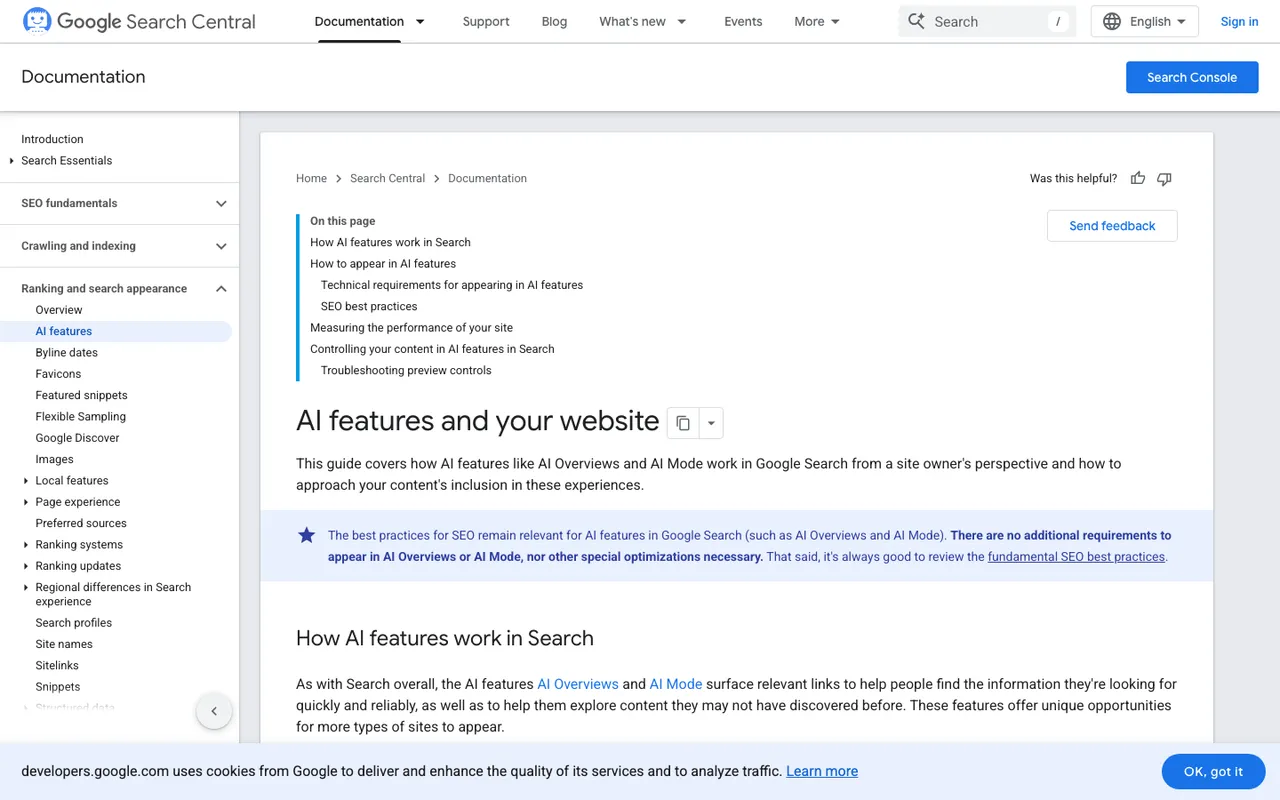
Google Search Central, "AI features and your website", captured November 21, 2026.
Neither company publishes the sub-queries for your prompts. You have to observe them. Promptwatch records query fan-outs per model for every tracked prompt, with the exact sub-queries behind each response. That record is what an agent can act on. A fan-out generator that predicts searches gives an agent a plausible list, and an agent will act on a plausible list just as confidently as on a real one. That is the risk.
What an agent can run unattended
Finding the gaps. Promptwatch's content gap analysis scores how well your pages cover tracked prompts, on every plan. The Action Board's Discovery agent investigates on a weekly schedule, one focus per day, and suggests up to five evidence-backed actions per run. Content gaps are one of the action types it files.
Planning and drafting. On Business ($579 a month) and Enterprise, the Content Agent plans, writes and publishes against visibility gaps on a schedule, with a publishing calendar, a monthly budget and publish windows. It can write from a tracked prompt, a fanout, or a cited page. It picks internal links before writing, favoring pages with many Search Console impressions and few clicks. Since November 13, its new articles open with key takeaways, answer each heading in its first lines, and end with an FAQ. If web search is down during research, it stops instead of guessing.
Publishing. Drafts go to WordPress, Webflow or Framer, as draft or live. Publish status tracking then follows each document from draft to live URL and on through crawls, citations and AI traffic.
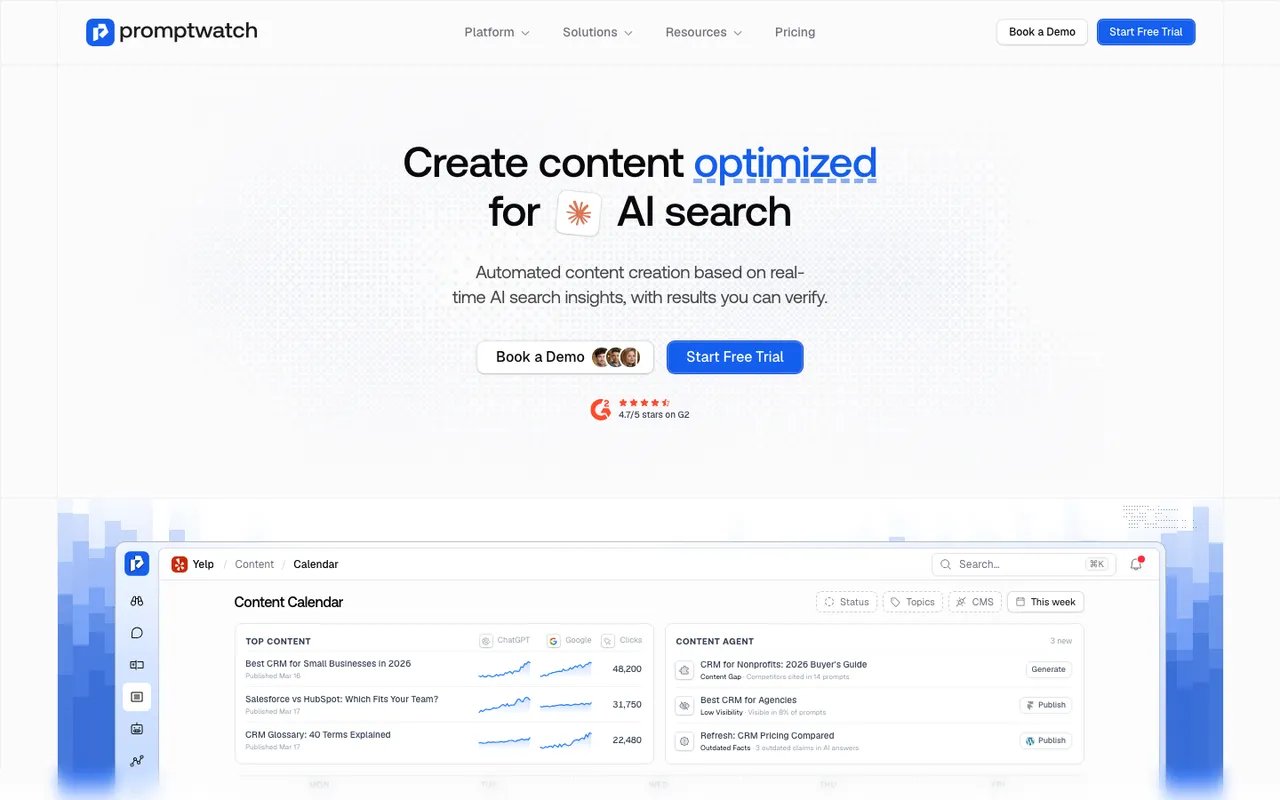
Promptwatch's Content Agents feature page, captured November 8, 2026.
Reporting. Agent Chat can run multi-step analyses over prompts, citations and crawler logs, and Scheduled Chats deliver a recurring briefing in-app or in Slack. Through the hosted MCP server, with 110+ read and write tools, an outside agent such as Claude Code or Cursor can pull the same data and move Content Agent calendar items.
What should still pass through a person
Choosing the prompts. An agent can suggest prompts from Search Console or People Also Ask through Prompt Explorer. Deciding which buyer questions matter to revenue is a business call.
Approving claims. A fan-out about pricing or compliance invites the model to state facts about you. Keep the review inbox on for those topics. Automated mode is fine for glossary and how-to pieces; it's a poor idea for a page that quotes your own prices.
Judging whether a fanout is worth a page. Some sub-queries are better answered by updating an existing page. Content Refresh produces diff-style suggestions for that, and a human should pick between a refresh and a new article.
How other tools compare on acting, not reporting
AthenaHQ is the closest rival in spirit. Its Action Center turns gaps into assignable tasks, and Starter at $295 a month includes a content optimization agent. Our catalog doesn't document fan-out extraction or CMS publishing for it, so the agent works on gaps rather than on logged sub-queries.
Goodie AI runs agents that write and optimize content and fix technical signals, with an MCP server on every plan. Core is $295 a month for 110 prompts and 50 optimization actions.
AirOps gives you a workflow builder to wire your own agents together. Powerful if you have an operator to build it; you still need fan-out data from another source.
Profound sells agents for content, demand and PR on a custom Enterprise plan. Broad, but general purpose.
Outrank and SEObot are content autopilots. Outrank publishes 30 articles a month for $99. SEObot starts at $49 for 9 articles. Both research keywords and publish on a schedule, and neither publishes visibility tracking across AI engines, so neither sees what ChatGPT searched.
Closing the loop is the part to automate last
Fan-outs change. Promptwatch's report "ChatGPT Now Uses the site:operator at Scale" found the average fan-outs per ChatGPT response jumped from about 1.08 to about 1.83 on August 8, 2026. An agent that wrote against a July sub-query list kept writing against it unless something told it otherwise.
That correction comes from measurement. Promptwatch's Page Tracker and Citation Trends follow each published URL, Agent Analytics shows whether ChatGPT-User fetched it (crawler logs start on Professional), and pages that underperform come back as Action Board items or Content Refresh suggestions. That feedback is what makes it agentic rather than a scheduled article generator.
Where to start
Turn on the agent in review mode first. Run Business through the 7-day free trial, connect one CMS, and let the Content Agent propose a week of pieces against your weakest prompts. Approve what's right, decline what isn't, and switch individual topics to automated only after a few cycles of clean drafts.