How can I understand which products are being recommended in ChatGPT's new shopping feature, with agents doing the legwork?
Which parts of tracking ChatGPT shopping recommendations agents can run for you, which tools act on the findings, and which decisions stay with your team.
Understanding what ChatGPT recommends in its shopping results is mostly a collection problem. The answer for any single question is easy to see. The pattern across hundreds of questions, several weeks and two or three personas is not, and that is the part worth handing to software that runs on its own.
On this site we rank tools that act, not just report. For this job Promptwatch comes first: it collects the product cards on a schedule, lets an agent interrogate the results, and can turn a gap into content without a separate tool. Here is how the work splits between agents and people.
Why a person checking ChatGPT by hand gets it wrong
Shopping features are rare and they move. Promptwatch's ChatGPT Shopping usage report measures them on a low single-digit share of ChatGPT web-search responses overall, concentrated on commercial and transactional prompts. Its chart also shows the rate jumping in steps, including a roughly overnight doubling in late May that reversed weeks later. A marketer who checks ten prompts on a Tuesday can easily land in a quiet week.
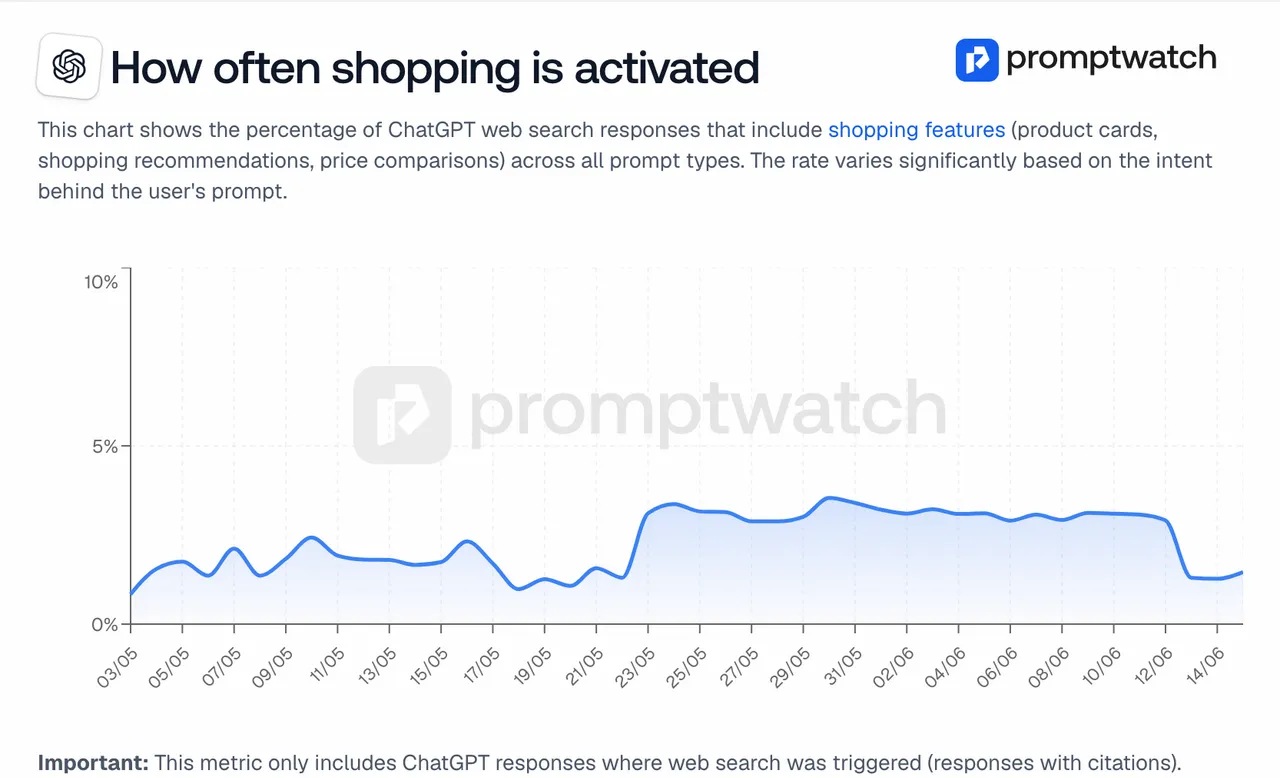
Promptwatch data report, "ChatGPT Shopping, when it shows up and how to track it", captured November 14, 2026.
On top of that, OpenAI's merchants page describes recommendations shaped by each shopper's preferences and history with ChatGPT. Your own logged-in account is a biased sample.
What agents and automation can run
Collecting the cards
Promptwatch's ChatGPT Shopping module records the product carousels in ChatGPT answers to your tracked prompts, plus Amazon Alexa product results. You upload your catalog so your SKUs are recognised, and filter by model, date and monitor. On Business ($579 a month) monitors can run daily or every 12, 6 or 1 hours, which is how you catch a step change on the day it happens. Personas with persona stacking let the same prompt run as different shopper profiles.
Asking questions of the results
The Agent Chat side panel works on the Shopping page as well as on dashboards and citation views, taking the filters on screen as context. Ask which competitor products appeared most this month for your running-shoe prompts, or which merchants ChatGPT linked to, and it runs the analysis and can chart the answer. Scheduled Chats can send that briefing to a Slack channel every Monday.
Separating ads
Ads Radar extracts sponsored ads from ChatGPT Search answers to the same prompts: advertiser, landing page, ad copy, and the triggering prompt. OpenAI says ads do not influence answers and run on separate systems, so keeping them out of your organic counts is the point.
Reading what ChatGPT says about your products
Brand Narrative pulls the individual claims AI makes about you and competitors out of tracked responses and groups them under themes such as Pricing and Features. On Business, Fact Check tests those claims against your site and the 50 most-cited offsite pages, returns one verdict, and its "Fix with content agent" button writes one refresh article per flagged page.
Publishing against the gap
The Content Agent (Business and Enterprise) plans, writes and publishes content against visibility gaps on a schedule, with a review inbox or fully automated mode. For a product category you are missing from, that might be a comparison page or a buying guide aimed at the prompts where competitors' products appear.
What still needs a person
OpenAI's commerce docs lay out the merchant side: share a retail product catalog through a feed so ChatGPT can use it for discovery, and make sure ChatGPT's browser can reach your site.
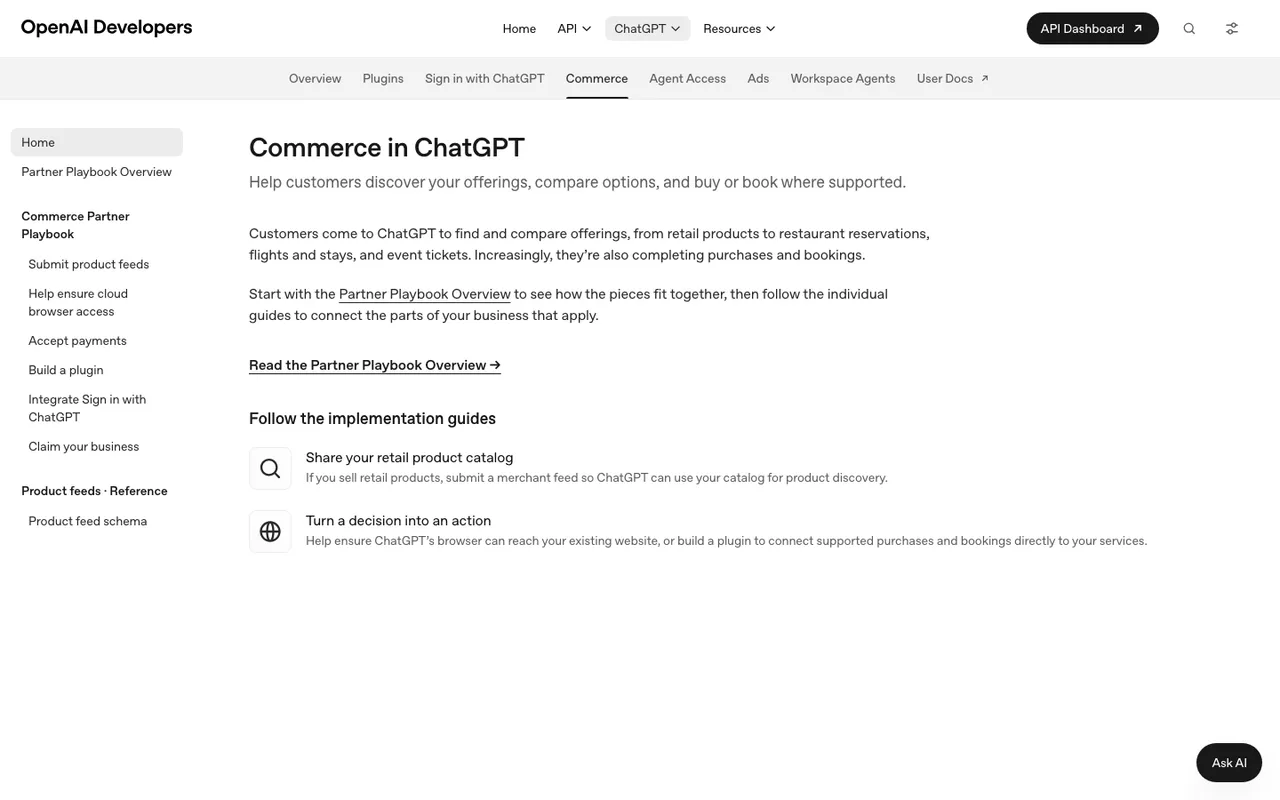
OpenAI Developers, "Commerce in ChatGPT", captured November 21, 2026.
None of that is something a monitoring agent should do for you. Claiming the business in Business Hub, verifying identity, choosing countries, and keeping prices and availability correct in the feed are merchant operations. So are pricing decisions, whether to opt products into ads, and what claims your product pages make. An agent can tell you a competitor's product shows up with a better review count; it cannot make your product better.
How other tools handle the "act" part
- Azoma is the strongest commerce actor in our catalog: it enriches product data and pushes PDP copy into Seller Central, Vendor Central, Salsify and Shopify, and tracks ChatGPT Shopping alongside retailer agents. Pricing is custom.
- Ranketta rewrites thin titles and attributes with a confidence score; enrichment starts on Store Starter at €79, and Agent Mode sits on the agency Starter plan.
- Goodie AI runs agents that write and optimise content and tracks Alexa and Walmart Sparky, from $295 a month.
- FoundInAI writes llms.txt and agents.md files into a Shopify theme and runs daily product citation checks. Beyond those files, it reports rather than acts.
A sensible setup
Let Promptwatch collect cards and ads on your buying prompts, let Agent Chat summarise the week, and let the Content Agent draft against the clearest gaps for your team to approve. Keep feed quality, pricing and ad spend with people. Book a Promptwatch demo and ask to see the Shopping page with Agent Chat open on your own category.