What is agentic commerce and how does it work when agents shop and agents sell?
Agentic commerce means AI agents shopping for buyers. How they find and pay for products, which merchant tasks your own agents can automate, and what needs a person.
This site ranks tools that act instead of just reporting. Agentic commerce is the same idea pointed at shopping: the buyer's AI agent doesn't hand over a list of links, it acts. It narrows the field, picks a product and, where the merchant supports it, pushes the order toward checkout. Which raises the question we care about here. If the buyer has an agent, how much of the merchant's side can agents run too?
How the buyer's agent works
Think of it as four moves.
It gathers product data. In ChatGPT, OpenAI says shopping can draw on "product feeds and other available retail and public web sources". Google's Universal Cart sits on its Shopping Graph, which Google describes as more than 60 billion continually refreshed product listings.
It decides. Neither OpenAI nor Google documents how products are ranked, so treat this step as a black box you can observe but not tune directly.
It reaches outside tools. The Model Context Protocol is the common plug here: an open-source standard for connecting AI applications to external systems, open-sourced by Anthropic in November 2024 and now a Linux Foundation project, with clients including Claude, ChatGPT, VS Code and Cursor. Both ACP and Google's UCP offer MCP bindings alongside REST.
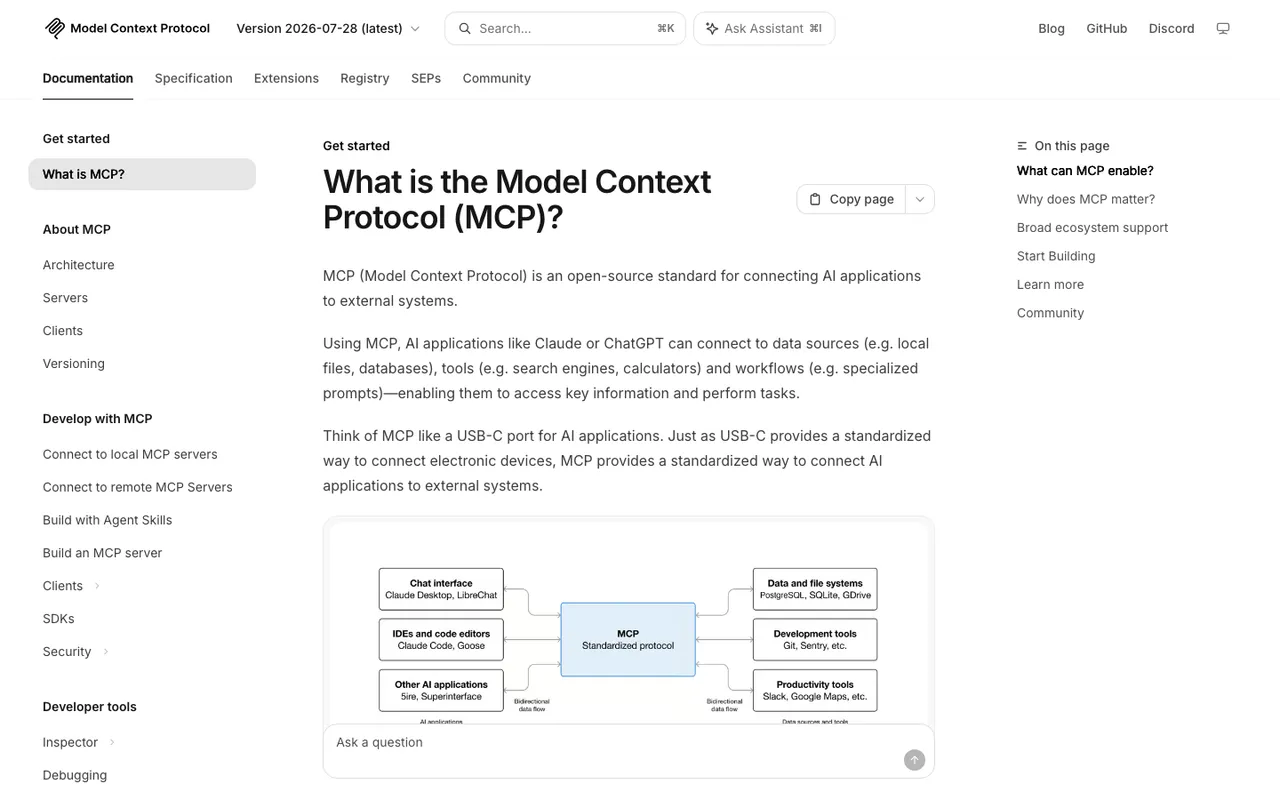
Model Context Protocol, "What is MCP?", captured November 21, 2026.
It pays, or hands off. Google's Agent Payments Protocol (AP2) was designed for the moment a human is no longer the one clicking "buy". Its documentation frames the problem as three questions, authorization, authenticity and accountability, and answers them with signed mandates: a Checkout Mandate for the cart and a Payment Mandate for the payment. Each comes in an open form, with the user's constraints before a cart is final, and a closed form for a specific checkout. AP2's samples cover both human-present and human-not-present purchases.
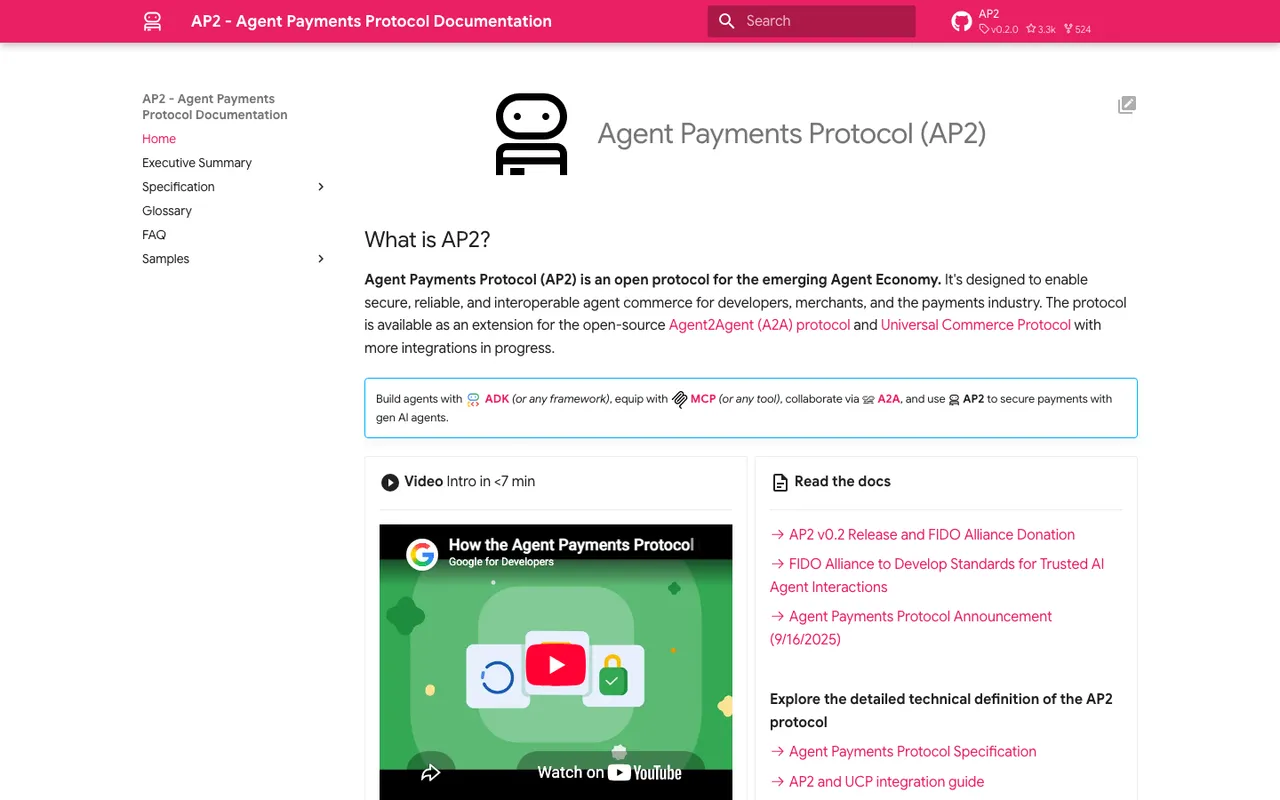
Agent Payments Protocol documentation, ap2-protocol.org, captured November 21, 2026.
In practice the handoff is often more modest than full autonomy. OpenAI says it is moving away from standalone Instant Checkout in ChatGPT, and purchases are completed on merchant-owned sites or apps. In Google's native UCP checkout, the user fills in payment and fulfillment details in a Google interface, and Google's guide says "The Agent is not involved in this part".
What the merchant's agents can take over
Watching what the buyer's agent recommends
This is the most automatable part and the most neglected one. Promptwatch tracks ChatGPT's shopping carousels and Amazon Alexa product results against your uploaded catalog (ChatGPT Shopping, on Business and Enterprise), and Ads Radar records the sponsored ads that appear in ChatGPT Search, Google AI Overviews and AI Mode answers. Since November 6, Agent Chat runs on the Shopping and Ads Radar pages, so you can ask which competitor products took a carousel this week and get an answer from live data. The REST API and MCP server expose Shopping data too, which lets your own agents pull it.
Writing the content agents read
When the tracking shows a product category where you're absent, the Content Agent on Business plans can plan, write and publish pages against that gap on a schedule, to WordPress, Webflow or Framer. A review inbox lets you approve, edit or decline each piece, or you can run it fully automated.
Keeping product data honest
Agents repeat what they read, including stale prices. Promptwatch's Brand Narrative, on every plan, pulls the individual claims AI makes about you out of tracked answers, groups them under themes such as Pricing and Features, and scores them. On Business, Fact Check goes further: it checks a claim against your own site and the 50 most-cited offsite pages for it, returns one verdict, and "Fix with content agent" writes a refresh article for each flagged page on your site. For a shop whose prices change, that's a loop worth automating.
Turning findings into a queue
The Action Board collects prioritized actions, and a Discovery agent investigates weekly and proposes up to five evidence-backed actions per run. For a shop, that's where a "your product page isn't being crawled" finding becomes someone's ticket.
Other tools that act on commerce
Ranked for this job, behind Promptwatch:
- AthenaHQ has an Action Center with assignable tasks and a content optimization agent, from $295 a month. Bloomreach, an ecommerce personalization company, announced its acquisition on November 16, 2026.
- Azoma acts on the catalog itself, pushing enriched product copy into Seller Central, Vendor Central, Salsify and Shopify, and lists support for ACP and UCP. Sales-quoted.
- Goodie AI runs agents that write and optimize content and tracks surfaces such as Alexa and Walmart Sparky, with an MCP server on every plan; SKU-level commerce visibility is on Pro at $999 a month.
- Botify rebuilds product feeds for Google and OpenAI inside an enterprise SEO platform. No public price.
What still needs a person
Agents won't sign your contracts. Someone has to apply to ChatGPT's merchant program (unless you're on Shopify or Etsy, where OpenAI says the catalog is already integrated), claim and verify the business, and choose countries and currencies. For Google, someone has to join the UCP waitlist, agree to the UCP Program Addendum and get the integration approved. Deciding which products are eligible for agent checkout is a policy call too: Google's native checkout excludes subscriptions, pre-orders, used items, services and several other categories by rule.
And someone has to decide which agents get through your bot protection. Google-Agent and ChatGPT's signed cloud browser both act for real users.
Start with the watching. A 7-day free trial of Promptwatch on Business shows which products the buyer's agents recommend today, which is the baseline every other decision here depends on.