How do merchants get listed in Google Universal Cart and AI Mode checkout, and which parts can agents run?
Google's Universal Cart and AI Mode checkout run on an agentic protocol. Here is how merchants get listed, which steps automation can own, and which still need a human.
Google describes its commerce work as two fronts: agentic capabilities that act on a shopper's behalf, and practical tools that keep shoppers in control. Universal Cart, which launched in the U.S. on October 15, 2026, is the second kind. The protocol under its checkout, the Universal Commerce Protocol (UCP), belongs to the first. Google says UCP enables agentic actions on AI Mode in Google Search and Gemini, "starting with direct buying".
So merchants are being asked to plug into an agent-facing system. It makes sense to ask the same question of your own operations: which parts of getting listed and staying listed can software run, and which need a person who can sign things?
What UCP expects from a merchant
The listing path is mostly configuration. Merchant Center has to be in good standing, with products approved for free listings, return policies configured (cost, window, link to the full policy), and at least one support contact. Product data carries a native_commerce group: checkout_eligibility must be TRUE to opt a product into checkout, while cart transfer is on by default for approved products once your UCP profile at /.well-known/ucp declares the cart capability.
From there you pick a depth. Cart transfer hands the shopper to your own checkout through a continue_url. Native checkout puts the purchase inside Google's surface, with you as Merchant of Record.
Google says UCP is compatible with AP2, A2A, and MCP, and supports both REST and an MCP binding. The AP2 project itself says it's available as an extension for A2A and for UCP.
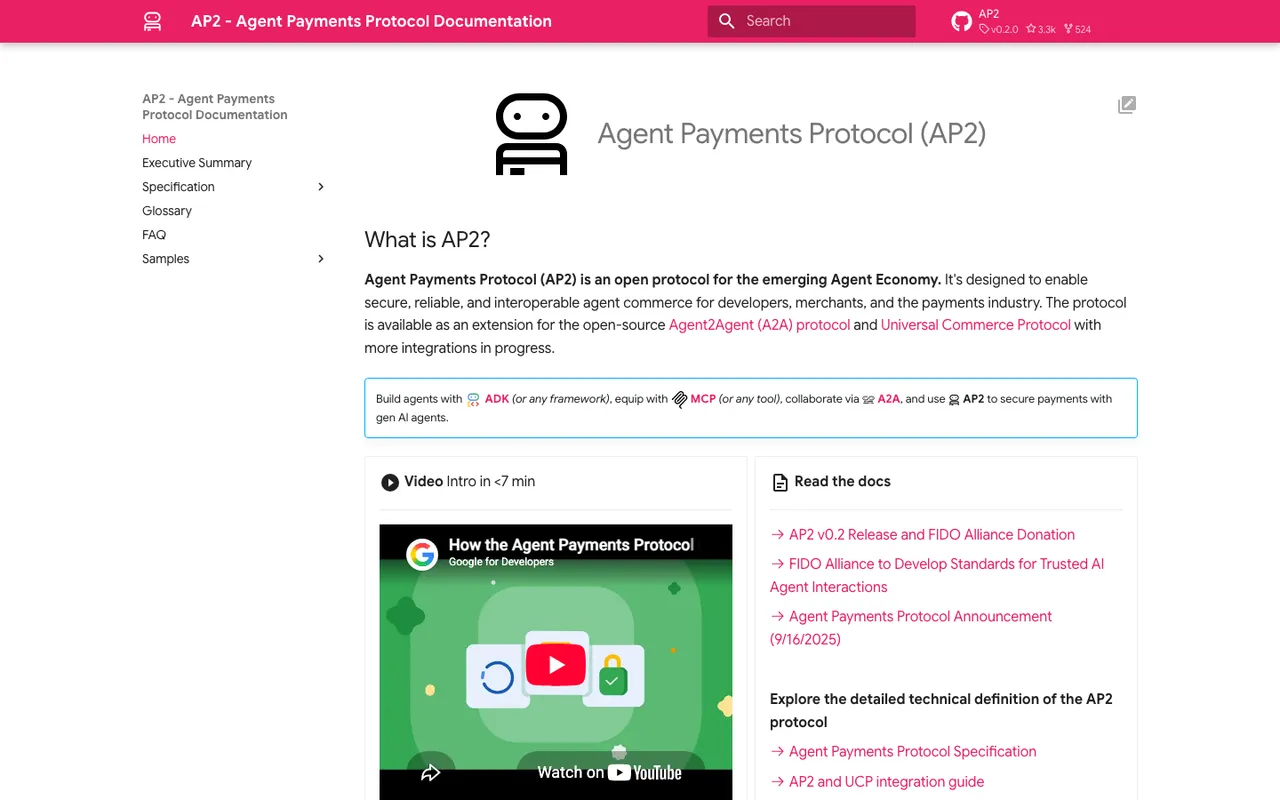
Agent Payments Protocol (AP2) documentation home, captured November 21, 2026.
Where automation fits
Keeping product data truthful
Universal Cart's selling point to shoppers is price-drop and back-in-stock alerts, built on the Shopping Graph. That puts pressure on your data freshness. Google recommends the Merchant API for real-time price and inventory, and a supplemental feed for the checkout attributes, since the native_commerce group is fully replaced on each upload. Both are ideal jobs for a scheduled pipeline: no judgment involved, lots of repetition, expensive when missed.
Watching what AI Mode says
Eligibility doesn't guarantee recommendation, and Google publishes nothing on how AI Mode ranks products. Someone, or something, has to keep asking. Promptwatch runs shopping prompts daily in Google AI Mode, AI Overviews, and Gemini through their real interfaces. Its Discovery agent works the data on a weekly schedule and proposes up to five evidence-backed actions per run on the Action Board: a buying-guide gap, a competitor's page AI Mode keeps citing, a crawl error on a product category. Agent Chat answers follow-up questions in place, and the hosted MCP server (110+ tools) lets your own agents pull the same data.
On Business, Ads Radar adds the paid layer: it captures sponsored ads that appear in AI Mode answers to your tracked prompts, with advertiser, landing page, and the prompt that triggered them.
Writing the pages AI Mode reads
Citation analytics show which pages AI Mode cites for each shopping prompt. When those turn out to be buying guides or comparisons you don't have, that's a content gap rather than a feed problem. The Content Agent (Business and Enterprise) plans, writes, and publishes against those gaps on a schedule to WordPress, Webflow, or Framer, with a review inbox if you want one.
What still needs a person
The commercial commitments. Joining the waitlist, agreeing to the UCP Program Addendum, and passing Google's review of your native checkout integration are steps a company takes, not a script.
Eligibility judgments. Google's list of products excluded from checkout covers subscriptions, installments, personalized and refurbished goods, pre-orders, age-restricted items, rentals, and more. Deciding where a borderline SKU falls is a merchandising and legal call.
Consumer notices. The consumer_notice attribute carries legal disclaimers, safety warnings, and Prop 65 text, up to 1,000 characters. Someone accountable writes those.
The payment step itself is also deliberately agent-free. Google's native checkout guide says the shopper enters payment and fulfillment details in a Google UI, and "The Agent is not involved in this part".
Agents visiting your site are a separate matter. Google lists user-triggered fetchers, including Google-Agent, used by agents on Google infrastructure to browse and act on a user's request, and says these fetchers generally ignore robots.txt.
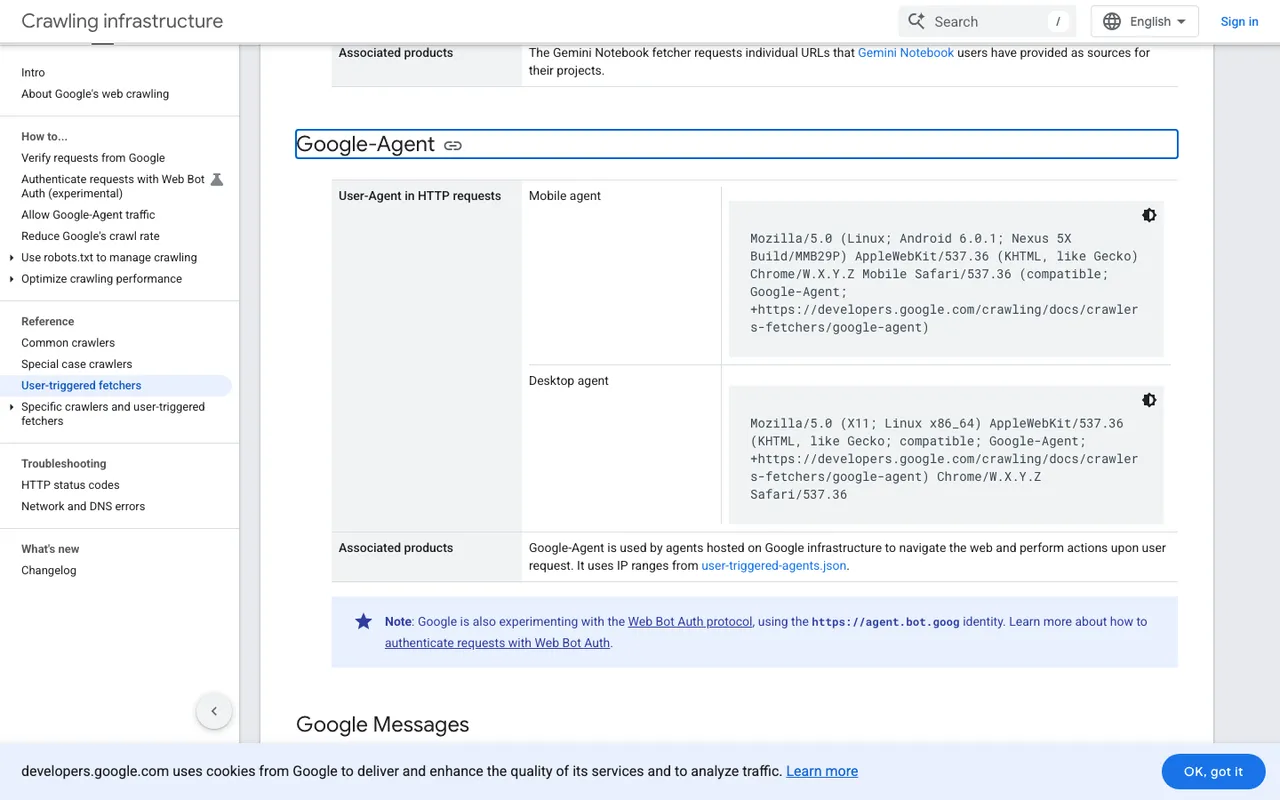
Google Search Central, "List of Google user-triggered fetchers", captured November 21, 2026.
Promptwatch's crawler logs (from Professional) record Google-Agent visits, so you can see when agents start hitting product pages.
Agentic tools for the monitoring side, ranked
- Promptwatch: monitors AI Mode, runs a Discovery agent, writes and publishes content, and tracks AI-referred traffic. From $95/mo; Content Agent and Ads Radar from Business ($579/mo).
- AthenaHQ: action queue and content optimization agent, $295/mo Starter, a listed Shopify integration. Now owned by Bloomreach.
- Goodie AI: agents that write and optimize content and fix technical signals, an MCP server on every plan, and tracking of agentic commerce surfaces such as Alexa and Walmart Sparky. Core $295/mo.
Get the configuration steps done by hand, once. Then hand the watching to software: start a Promptwatch trial and put your highest-margin shopping prompts into an AI Mode monitor before your checkout integration goes live.