What schema markup do I need so AI agents can read my product pages, and what can an agent automate?
What schema markup AI agents need on product pages, why agents that browse and buy also need clean visible data and feeds, and which upkeep work agents can automate.
"AI agents reading my product pages" used to be a figure of speech for crawlers. It isn't anymore. OpenAI documents a cloud browser that ChatGPT uses to read pages and click on a user's behalf. Google documents Google-Agent, a fetcher for agents on Google infrastructure that navigate the web and perform actions when a user asks. Both protocols for agent checkout, OpenAI and Stripe's Agentic Commerce Protocol and Google's Universal Commerce Protocol, are live in some form.
So the markup question has a second half. An agent that's comparing, carting or buying needs the same facts a shopper does, in a place it can't misread. Then someone has to keep those facts right every week. This piece covers both: what to put on the page, and how much of the upkeep an agent can do.
What an agent needs to find, and where
On the visible page. Google's AI features guide lists "important content in text" among its practices, and says structured data should match visible text. An agent clicking through a hosted browser reads what renders. If the price only appears after a script runs or a variant is chosen, assume a machine reader may not get it.
In the markup. Google's merchant listing spec is the reference. Required: a Product with name, image and an offers block that is a single Offer with a positive price and an ISO 4217 priceCurrency. Recommended and useful to an agent: availability, itemCondition, shippingDetails, hasMerchantReturnPolicy, brand.name, gtin, mpn, sku, description, and variant links via inProductGroupWithID or isVariantOf. That's enough for a machine to answer "is it in stock, what does it cost delivered, can I return it."
In a feed. OpenAI's product feed covers ChatGPT shopping discovery. Variants go in as one row each, tied together with group_id, listing_has_variations and variant_dict. Search eligibility defaults on; checkout and ads default off, and OpenAI says checkout needs a separately enabled integration. For Google checkout, products need native_commerce(checkout_eligibility) set to true in Merchant Center.
A caveat worth stating: no vendor page we read says AI agents rank products by schema. Google says no special schema is needed for its AI features. Markup makes your facts unambiguous; it isn't a ranking switch.
Where agents transact, not just read
The Agentic Commerce Protocol is "an open standard for programmatic commerce flows between buyers, AI agents, and businesses," developed by Stripe and OpenAI. Its site is explicit that implementing ACP doesn't automatically list your products; each AI platform runs its own process.
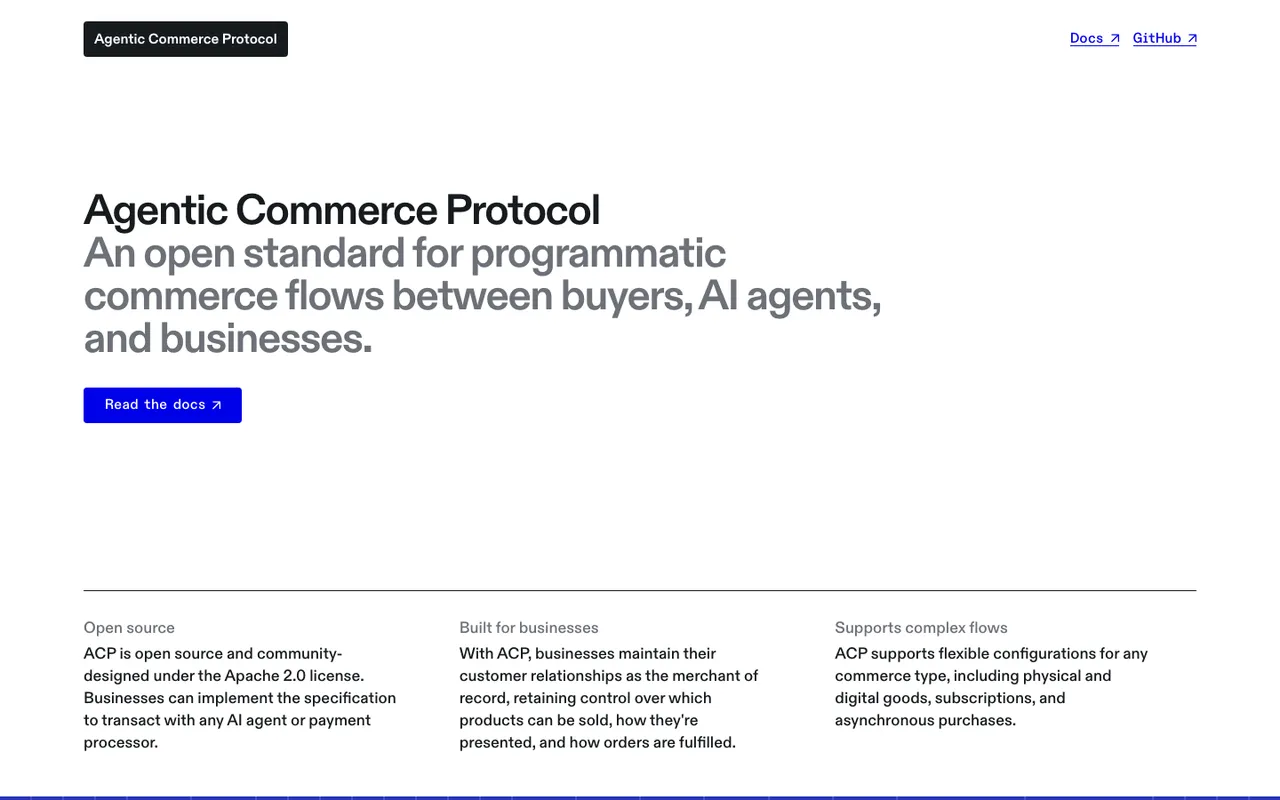
The Agentic Commerce Protocol site at agenticcommerce.dev, captured November 21, 2026.
On Google's side, Universal Cart launched in the U.S. on October 15, 2026, with checkout powered by UCP. Before building, merchants need a Merchant Center account in good standing with products approved for free listings, return policies configured, and at least one customer support contact. Google reviews and approves the integration before you go live on AI Mode and Gemini.
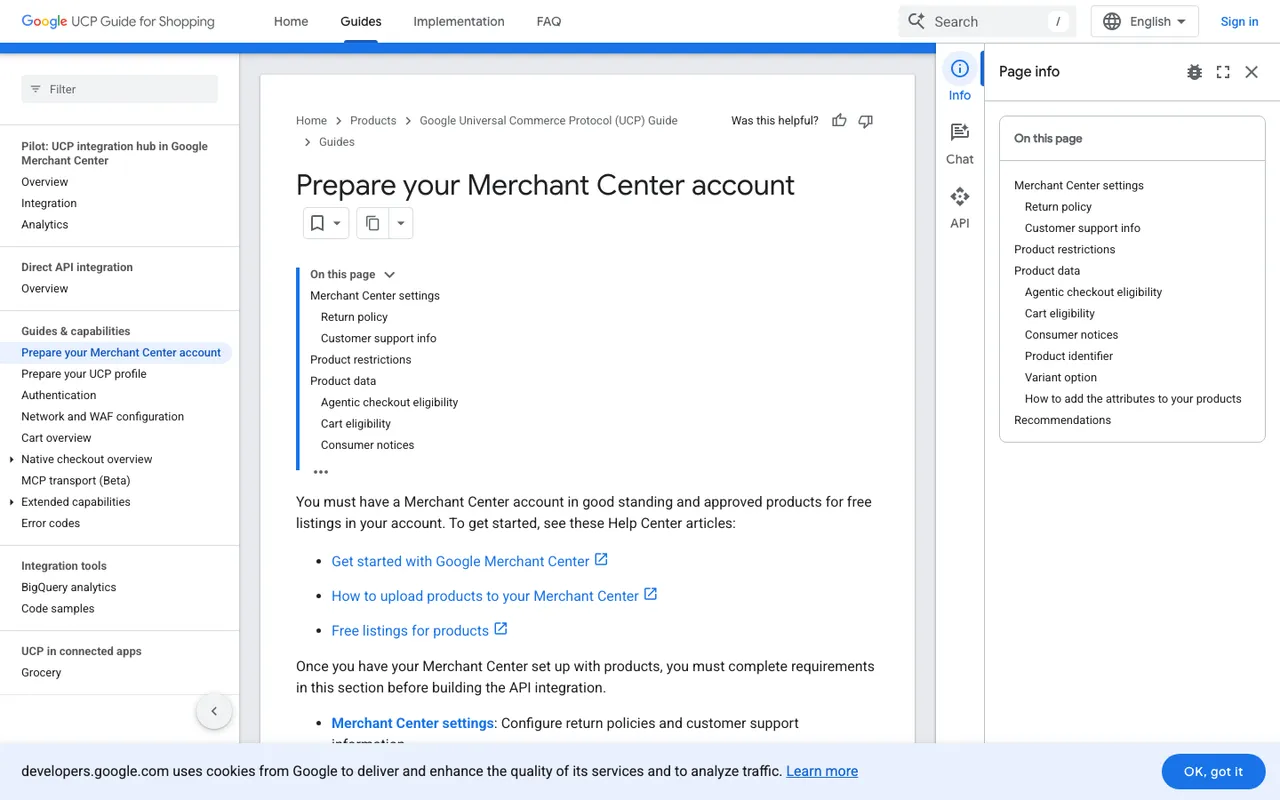
Google's "Prepare your Merchant Center account" UCP guide, captured November 21, 2026.
What an agent can maintain for you
Markup is a one-time template change. Keeping product facts right in AI answers is ongoing, and that's where agents earn their keep. In Promptwatch:
- ChatGPT Shopping (Business and Enterprise) tracks which products ChatGPT's shopping carousels and Amazon Alexa product results recommend, against your uploaded catalog.
- Fact Check (Business, Agency Scale, Enterprise) checks claims AI makes about your brand, such as a price or a spec, against your site and the 50 most-cited offsite pages for that claim, and returns one verdict. "Fix with content agent" writes one refresh article per flagged page on your site.
- The Content Agent (Business and Enterprise) plans, writes and publishes against visibility gaps on a schedule, either through a review inbox or fully automated. Content Refresh suggests diff-style updates to existing pages.
- Agent Chat works from the Shopping page and the rest of the dashboard, and the MCP server lets your own agent query the same data.
- Agent Analytics (from Professional) shows whether OAI-SearchBot and Google-Agent are actually requesting your product URLs and what status codes they get.
Elsewhere in our directory, AthenaHQ lists automated schema and entity tagging, which handles the markup step itself. Azoma acts on the catalogue for marketplace brands and lists support for ACP and UCP. Goodie AI runs agents that fix technical signals and suggest schema. We rank Promptwatch first because it's the one that closes the loop from crawl to recommendation to corrected claim.
What still needs a person
- Template changes. Someone with access to your theme or frontend has to ship the JSON-LD and keep it in sync with what renders.
- Feed onboarding. OpenAI's steps start in Business Hub with claiming the business and verifying identity. That's a person with authority.
- Policies. Return windows, return costs and support contacts in Merchant Center are business decisions, not content.
- Program terms. UCP go-live means agreeing to Google's UCP Program Addendum.
- The truth. An agent can flag that AI says your product costs less than it does. Deciding what the correct price, warranty or compatibility claim is stays with you.
Book a Promptwatch demo and ask to see ChatGPT Shopping and Fact Check on a few of your own product prompts. It's the quickest way to find out whether your current markup and feed are being read the way you intended.